History & Heritage
Five Centuries in the Making
The story of Indian Relay begins long before any modern track or scoreboard — in the return of horses to the Americas and generations of Native families who built deep relationships with their horse relatives.
Where It Begins
Before the Track
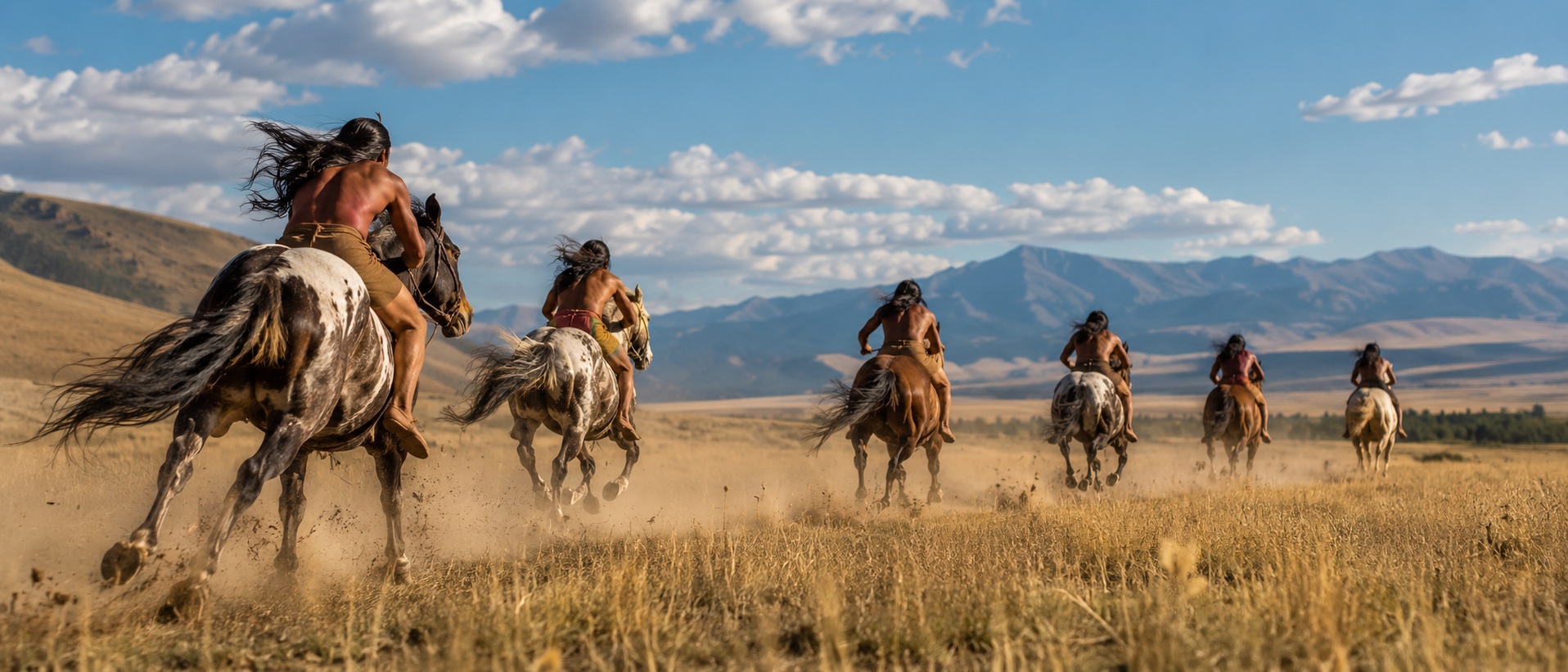
Indian Relay reaches back into the return of horses to the Americas, the rise of Indigenous horse cultures, and generations of Native families who built deep, enduring relationships with their horse relatives.
Horse Relatives
A Sacred Bond
For many Native nations, horses became central to travel, hunting, trade, ceremony, war, wealth, status, healing, and pride. The bond between people and horses was never only practical — it was spiritual and communal.
Roots of the Race
Modern Relay Roots
Among many communities, including the Shoshone-Bannock people at Fort Hall, Indian Relay is recognized as a powerful cultural tradition and a birthplace of modern competitive relay. Families continue to pass horsemanship, racing knowledge, and team traditions from one generation to the next.
A Horse-History Timeline
Five Centuries, in Brief
Indian Relay is rooted in more than 500 years of horse history. This timeline traces that broad arc — not the exact rules of today's sport, which took shape much more recently.
1493–1500s
Horses return to the Western Hemisphere through Spanish expeditions.
1600s
Indigenous communities across the West and Plains integrate horses through trade networks, oral traditions, and daily life.
1700s–1800s
Horse cultures transform travel, hunting, trade, warfare, ceremony, and identity across many Native nations.
1900s–Present
Indian Relay develops into a modern competitive sport with teams, rules, purses, championships, and large crowds.
2026 & Beyond
PIRL works to build the next professional chapter.
Helping the sport grow without losing what makes it sacred.
The horse, the family, the team, the culture, and the community.